
The only risks of removing a painted popcorn ceiling that an unpainted texture does not have are torn drywall paper, peeling tape at the seams, and a rough, uneven surface once the texture is gone. That layer of paint changes the way the ceiling reacts to water and pressure, which is why so many DIY jobs end up needing more repairs than the removal itself. The good news is that it’s avoidable once you know why the damage is done. This guide explains why painted popcorn ceilings react differently, the mistakes that lead to damage to the drywall, and the process that will get that texture off cleanly.
Why Painted Popcorn Ceilings Are Difficult to Remove?
The usual method of removing popcorn texture is to soak it in water until it softens and then scrape it off. Paint messes that up because it seals the surface, so the water sits on top instead of soaking into the texture below. You can be left with two bad choices if you do it wrong: either scrape a dry, painted surface and rip the drywall paper underneath, or oversaturate the area trying to force water through the paint and end up wicking moisture into the seams and tape. Either mistake makes a removal job a drywall repair job.
Common Ways Painted Popcorn Ceiling Removal Damages Drywall
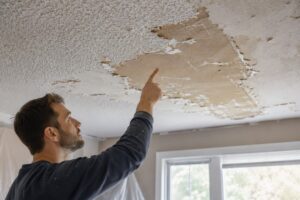
If the texture is dry or under-soaked, the scrapers may lift the paper facing of the drywall along with the popcorn. This leaves a fuzzy, torn patch that won’t hold paint evenly until it’s sealed and skim-coated.
Water-Wicked Seams and Tapes
If an area is over-wetted to compensate for the paint layer, water can seep into the joints between drywall sheets. That moisture can loosen the tape and joint compound at the seams, often not showing up as cracking or peeling until weeks or months later.
Uneven Sanding Marks
Once the texture is off, some DIYers sand hard to smooth out any bumps left behind. If you sand hard enough, you can end up with low spots or more paper fuzz that will require its own round of skim coating to repair.
The Right Way to Remove Painted Popcorn Ceiling Without Damage
Test a small area first.
Test a 2-3 square foot area before painting the whole ceiling so you can see how the paint and texture work together.
Lightly sand or scratch the paint layer.
Once the paint seal is broken, water can soak into the texture instead of sitting on the surface.
Soak it well and leave it.
Let the water sit for a few minutes to do its job before scraping; don’t scrape the surface when it looks wet.
Use a wide, sharp blade at a flat angle.
A low angle lifts the texture off the surface rather than digging into the drywall paper underneath.
Work in small chunks.
By taking one manageable area out at a time, you don’t have the water sitting in places you haven’t gotten to yet.
Why a Dust-Controlled Process Reduces Damage Risk
Traditional dry scraping is one of the most common ways drywall paper gets torn on a painted ceiling. A dry scraper has to dig harder to break through the paint layer. ByeByePopcorn’s Festool system offers an alternate dust-controlled method, removing texture more evenly across the surface, which means less digging in one spot and a lower risk of catching and tearing the paper underneath. That control is even more important with painted ceilings, where there is less room for error than with unpainted texture.
How to Fix Minor Drywall Damage If It Occurs
If some paper tears, even with careful work, it is usually fixable without replacing drywall. Loose or fuzzy paper can be sealed with a stain-blocking primer and then skim-coated with joint compound. For larger tears, a strip of self-adhesive mesh tape before mudding is a good idea; it helps keep the patch from cracking later. If you have loose tape at a seam, pull it off and re-tape it; don’t just mud over it. Mudding over loose tape just hides the problem for a while.
When to Do It Yourself and When to Hire a Pro
Painted Popcorn Ceilings: This is one of those situations where a little mistake can turn into a bigger, costlier repair. DIY scraping is much riskier for damaging drywall if you have many layers of paint on your ceiling, if you see seams showing near where you plan to work, or if the texture already looks patchy. A professional crew that does texture removal for a living will know those risk factors before they start and adjust their approach accordingly, which is often the difference between a smooth new ceiling and an unplanned drywall repair bill.
Protect Your Ceiling, Book Professional Popcorn Ceiling Removal From ByeByePopcorn
The key to removing a painted popcorn ceiling without damage is knowing why paint changes the process, and then using a methodical, section-by-section approach that doesn’t rely on brute force. The difference between a clean result and a drywall repair over the original work is not cutting corners, testing first, and understanding when a ceiling is not safe for DIY.
ByeByePopcorn crews work on painted and unpainted popcorn ceilings every day, so they know how to read a ceiling’s risk factors before the first section comes down. That experience protects your drywall and gives you a smooth, paint-ready surface without the trial and error of a first-time DIY attempt. Call ByeByePopcorn for proper assessment and removal of your painted ceiling.
FAQs
Can you remove a painted popcorn ceiling?
Yes, but it goes about it differently than unpainted texture. All you have to do is break or penetrate the paint layer so that the water can soften the texture underneath rather than sitting on the surface.
I removed my popcorn ceiling, and now the drywall tape is coming off. How do I fix this?
Peeling tape needs to be taken back and retaped, not covered over. Mudding over loose tape without repairing the seam underneath will usually lead to cracking again later.
Why does my popcorn ceiling look patchy after it has been removed?
Uneven removal, generally by scraping a dry or painted surface too hard, leaves some spots smoother than others. A skim coat will flatten the surface before you paint.