
Often referred to as popcorn ceilings, textured surfaces were a major interior design trend from the 1950s through the 1980s. With different names like stucco and acoustic, why did it dominate mid-century homes, and is it still a good choice today? Whether you love the retro look or can’t wait to scrape it off, here is a simple guide to everything you need to know about stucco ceilings.
What Really Is a Stucco Ceiling?
A stucco ceiling is a textured finish applied to a ceiling surface. Traditional outdoor stucco is made of heavy cement, sand and lime, but indoor ceiling stucco is a much lighter mixture. It’s usually a sprayable drywall compound with small particles added to give it that trademark bumpy texture.
It is called different things depending on the texture, region, and purpose, including acoustic ceilings or cottage cheese ceilings. The most popular variation is the popcorn ceiling. It has a heavy and chunky texture that resembles popcorn.
Chances are, you will find these ceilings in virtually any home built between the 1950s and the late 1980s. A perfectly flat, smooth ceiling takes a lot of time, skill, and labour to create. Overhead plasterboard joint mudding, taping and sanding is tiring work. Stucco was like a quick texture spray. Builders could spray the texture on a rough, imperfect ceiling and instantly hide every seam, dent, and flaw, thus saving themselves a lot of time and money.
Pros and Cons of Stucco Ceilings
If you have stucco ceilings in your home, you might be wondering whether to leave them alone or remove them. Weigh the advantages and disadvantages to determine what is right for your space.
Pro 1: It Hides Defects and Imperfections
The main reason builders loved this material was that it could hide mistakes. Ceilings are subject to slight structural settling, uneven sheets of plasterboard, and substandard taping. The roughness of the stucco texture provides shadows that melt these sorts of imperfections away seamlessly.
Pro 2: Sound Damping
The rough, uneven surface of a stucco ceiling breaks up sound waves rather than reflecting them. This acoustic benefit minimizes echoes in large rooms, busy hallways and bedrooms, making your whole home feel much quieter and cozier.
Pro 3: Easy Installation
Stucco is very economical to apply, taking considerably less labour and detail work than a perfectly smooth plasterboard finish. It remains one of the least expensive ways to quickly finish a ceiling surface.
Con 1: It’s a Total Dust Magnet
The rough, bumpy surface acts as a net to catch dust, cobwebs and cooking grease. Over time, gravity pulls debris out of the air and into the crevices, so your ceilings look dingy, grey and dirty much more quickly than smooth surfaces.
Con 2: Very Difficult to Clean and Repair
Wiping a textured ceiling down with a cloth doesn’t work, as the texture usually crumbles and falls off. Plus, if you have a roof leak or a plumbing problem, it’s almost impossible to match a patched area to the existing stucco texture during a repair.
Con 3: Outdated Aesthetics
Buyers love ceilings that are smooth, bright and modern. Stucco can make a room seem smaller and darker, since the heavy texture throws thousands of tiny shadows across the ceiling, which can ultimately hurt your property’s resale value.
How Do You Remove or Hide Stucco Ceilings?
If you’ve decided the retro look is no longer for you, there are a few main ways to achieve a modern, sleek look.
The Modern Festool Removal
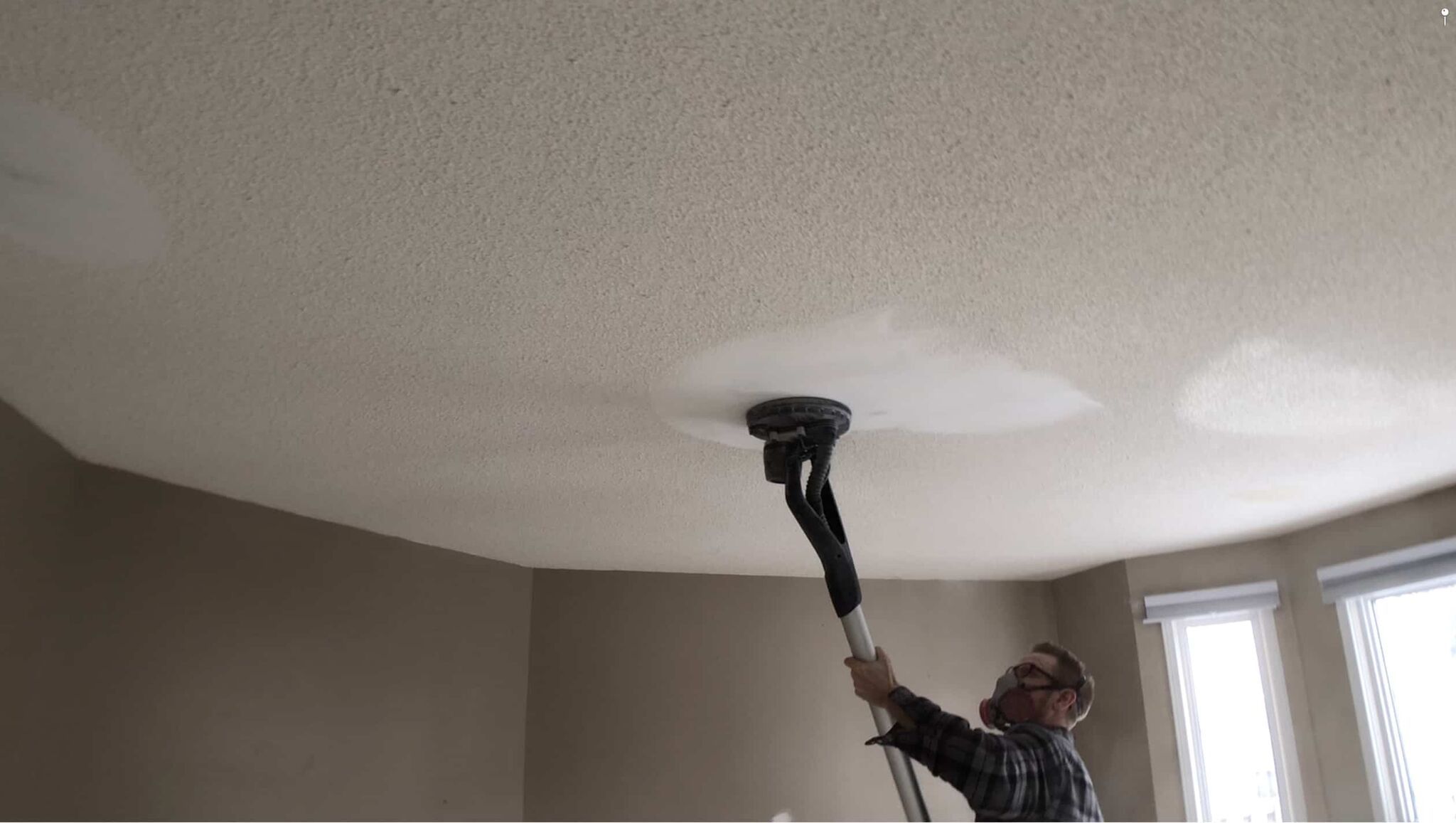
Although scraping is considered the cost-effective option, many professional companies, including ByeByePopcorn, use modern, efficient machinery such as the Festool System to remove popcorn from ceilings seamlessly. This machine is moved directly across the ceiling to scrape and sand away the popcorn texture while vacuuming up debris, resulting in a cleaner space.
The Scraping Technique
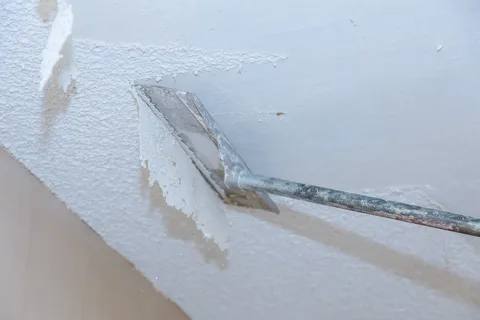
If your ceiling has never been painted, scraping is the most common approach. Unpainted stucco is water-soluble, so you can mist the ceiling with water from a garden sprayer, wait fifteen minutes for it to soften, and easily scrape it away with a wide putty knife. If the stucco has been painted over, the paint acts as a sealant, preventing water from penetrating the texture and making it much harder to scrape.
The Skim Coating Technique
Skim coating is a good alternative to scraping for ceilings that have been painted or have a lighter texture. The method is to leave the texture in place and then cover it with several thin coats of joint compound. You sand between coats until the surface is completely flat, smooth and ready for new paint.
Covering It Up
Sometimes the best way to deal with an ugly ceiling is to cover it up completely. You can put lightweight plasterboard panels or nice tongue-and-groove wood panels right over the old stucco. This can be a good solution if you suspect the old ceiling contains asbestos, but it should be assessed by a professional first because it encases the material safely without throwing dangerous dust into the air.
Tired of Your Stucco Ceilings? Let Our Experts Help You Get Rid of Them at ByeByePopcorn
Stucco ceilings were a brilliant solution for builders in the mid- to late twentieth century, offering a cost-effective way to hide flaws and quiet noisy rooms. But today they are mostly seen as an outdated design element that collects dust and darkens rooms.
If you’re ready for a change, smoothing them out can instantly brighten your rooms, eliminate a major cleaning headache, and bring your home right into the modern era.
We at ByeByePopcorn are experts in converting heavy, dated textures into beautiful, smooth, modern ceilings. Our professional team handles everything from safety testing and heavy containment setup to perfect scraping, skim coating and painting. We do the dirty work fast and clean so you can enjoy a bright, updated home without the stress. Call today for a free estimate, and let us help you improve your space.
FAQs
Does Stucco on the Ceiling Contain Asbestos?
Many textured ceilings made before the 1980s included asbestos, a fire-retardant material. If your home was built before 1990, it is important to test a small sample using a laboratory kit before you disturb, sand or scrape the surface.
Can You Paint a Stucco Ceiling?
Yes, you can paint it with a thick-nap roller and flat ceiling paint. However, painting stucco makes it a lot harder to remove later because the paint forms a waterproof barrier that prevents water from softening the texture.
Why Is It Called an Acoustic Ceiling?
It is called an acoustic ceiling because the thousands of tiny bumps create a large, uneven surface that absorbs sound waves rather than bouncing them around the room. This helps deaden echoes and soften noise levels inside a home.