
Most paint decisions are made wall by wall, and the ceiling is an afterthought, usually just ‘flat white, whatever’s left in the tray’. That’s a wasted opportunity. How a ceiling is finished and painted has a huge impact on how the surrounding walls read, and a few current trends are built around treating the two as one connected surface instead of two separate jobs.
Making Your Ceiling and Walls Work Together: What Works
Begin with the Correct Sheen for Each Surface
Ceilings and walls should usually not have the same sheen, even if the colour is the same. Ceilings typically have flat or matte finishes that diffuse light and conceal minor surface flaws. At the same time, walls usually go up to eggshell or satin for the extra durability and easier cleaning. This sheen difference matters: flat paint can make imperfections more noticeable on a surface that isn’t already smooth and consistent beneath it.
Full Colour Drenching: When a Single Colour Is All It Takes
One of the more talked-about techniques in current interior design is colour drenching, painting the walls, ceiling, trim, and sometimes even doors in one matching colour. Popular tones for this include sage green and terracotta, as the aim is to blend the visual break between the wall and ceiling and make the room feel bigger and more immersive rather than boxed in by contrasting lines.
Colour Capping: An Easier Way to Tie Ceiling and Walls Together
Colour capping softens this idea. Rather than a single colour all over, the ceiling will be a lighter or darker shade in the same colour family as the walls, creating a subtle tonal connection rather than a flat block of colour. It visually connects the two surfaces without a total drenching, and it tends to work in rooms where a single saturated colour would feel like too much.
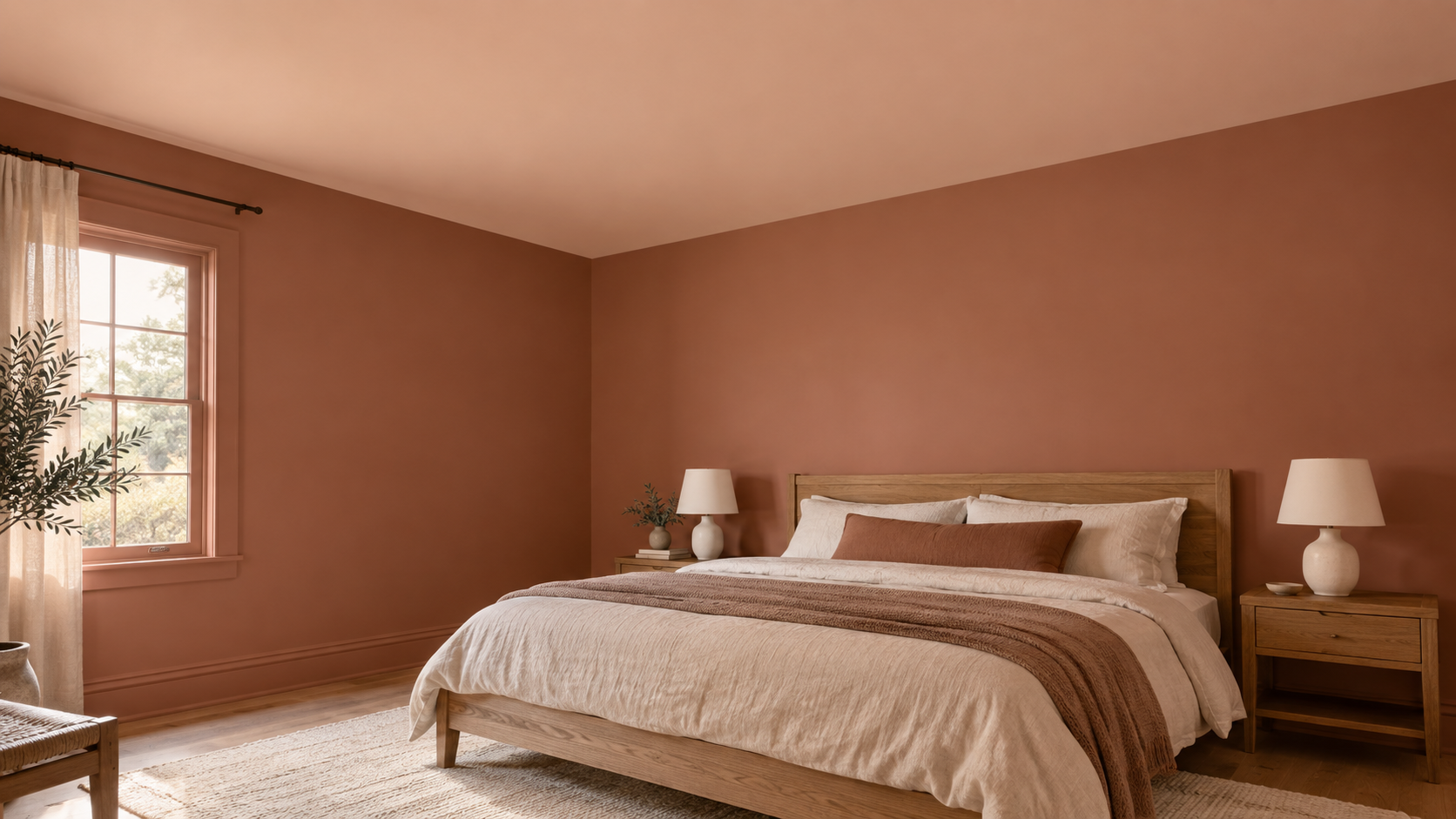
Keeping the Ceiling White or Pale on Purpose
Don’t overlook intentional contrast. Another current trend is to leave the ceiling intentionally white or pale while painting the walls a bolder colour, sometimes called cloud capping, and it works best when you treat it as a choice rather than a default. The difference matters: a crisp white ceiling with a saturated wall colour reads as intentional, while a dingy or uneven white ceiling reads as unfinished.
Nothing Works Over a Textured Ceiling
Drenching, capping and deliberate contrast all assume a ceiling that carries paint evenly. Popcorn texture scatters light unpredictably and makes uneven paint coverage more noticeable, undercutting any of these approaches before the colour choice even comes into play. Whichever way you are leaning, start with a nice, smooth surface.
A Few Combinations to Avoid
Some combinations can work against the room rather than complementing it.
- Matte wall colour with a glossy ceiling. The sheen mismatch pulls the eye upward for all the wrong reasons.
- Covering a small low-ceilinged room in a dark saturated hue. If it lacks enough natural light to balance it, it can feel like it’s closing in rather than absorbing light.
- Using two shades that don’t share an undertone. A cool ceiling shade with a warm wall colour tends to look more like a mismatch than a cohesive colour scheme.

ByeByePopcorn: Get a Paint-Ready Ceiling Without the DIY Guesswork
A full colour drenching, a subtle capped gradient, or a crisp white ceiling on purpose—all of it is contingent upon beginning with a ceiling that’s actually flat and ready for paint. You can’t get there with a quick weekend scrape-and-hope. It’s a process that determines what every colour choice on top of it will look like.
ByeByePopcorn eliminates the popcorn texture using the Festool system, a dust-controlled process that is faster and much cleaner than traditional scraping. It leaves a smooth, even surface that takes paint well, whether you choose a single solid colour or two coordinated tones. The team handles the texture removal and the painting, so the ceiling and walls are one finished job, not two separate jobs. Reach out to ByeByePopcorn to get your ceiling prepped for whatever paint approach you have in mind.
Frequently Asked Questions
Do you always have to paint the ceiling and walls a different colour?
Not quite. Colour drenching uses one colour throughout, while colour capping and classic white-ceiling contrast keep them separate. There is no set rule, and the best choice depends on the room and the effect you want.
What’s the difference between colour capping and colour drenching?
Drenching is painting the walls, ceiling and often the trim the same colour. Capping uses 2 or 3 shades from the same colour family. It doesn’t create a flat colour throughout the room, but a gradient.
Can I use the same sheen of paint on my walls and ceiling?
That is possible, but flat or matte is still the ceiling standard because it better hides surface imperfections, while walls generally benefit from the added durability of eggshell or satin.