
Popcorn ceilings, a must-have home interior in the 1970s, weren’t just about style—they were actually designed with a purpose. Homebuilders loved them because they were cheap and hid imperfections, but the most significant claim was that they improved sound. These bumpy textures were thought to convert your living room into a quiet sanctuary. But is this real or just a myth?
Read the blog below to learn more about popcorn ceilings and their effect on room acoustics.
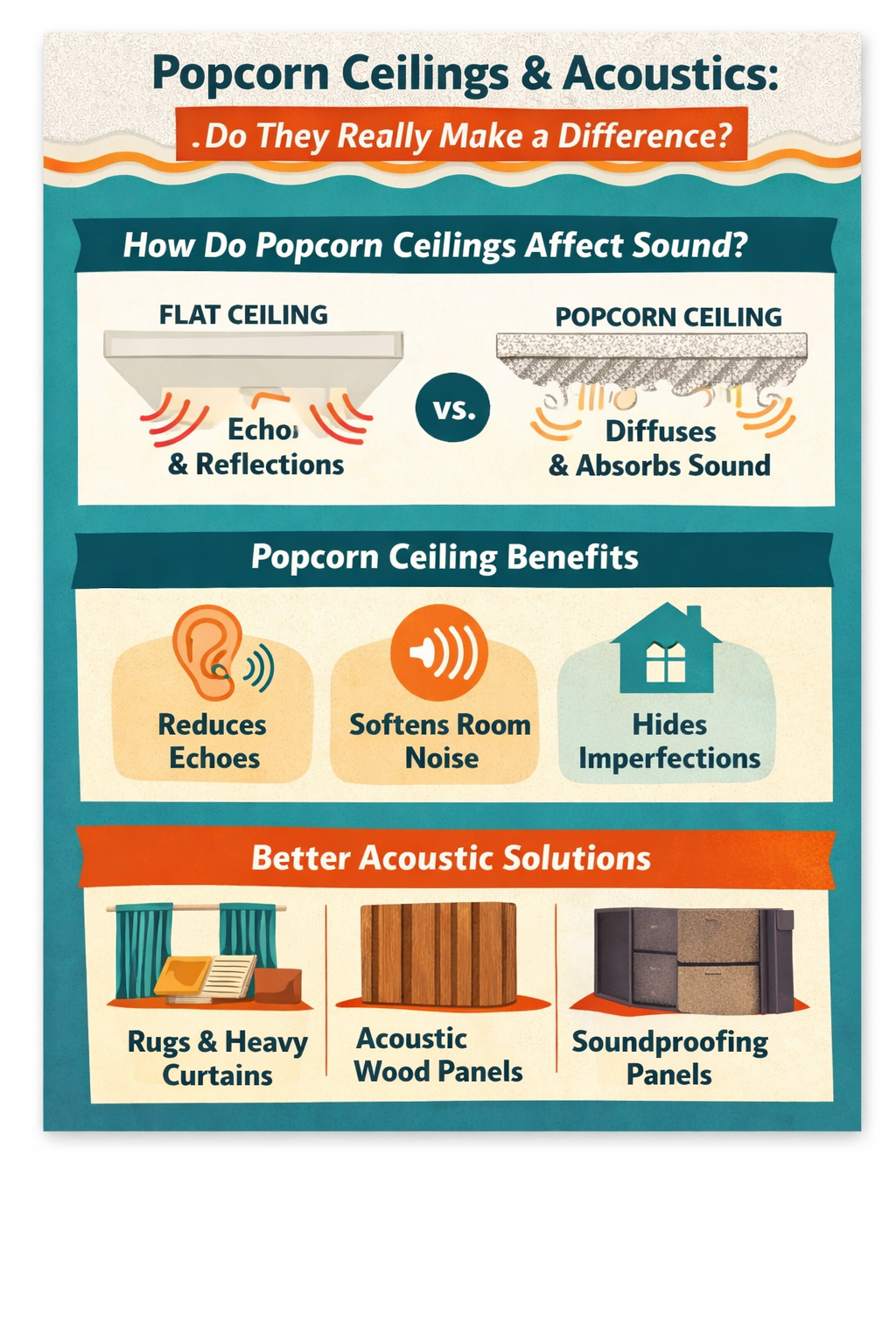
Popcorn Ceilings and Acoustics: What’s the Real Connection?
If you live in a house that was built between the 1950s and the 1980s, you probably know a lot about popcorn ceilings, which have a bumpy, cratered surface. These surfaces, also known as acoustic ceilings, were once the best choice for building homes. But what made them so popular? One reason was purely budget-related: it was much cheaper to apply a thick texture to a ceiling than to sand and polish it to a smooth shine. The name “acoustic ceiling” suggests a functional benefit as well.
Popcorn ceilings and acoustics are related because of how sound waves act when they hit a surface. Sound waves bounce off flat, rigid walls and a smooth ceiling like a tennis ball hitting a concrete floor. They bounce right back, making echoes and giving the air a sharp, ringing sound. Builders roughed up the ceiling by adding thousands of tiny bumps and pits. This breaks up sound waves. The texture was made to catch and spread sound, not let it bounce around the room.
How Do Popcorn Ceilings Affect Sound Levels?
A lot of people think that a popcorn ceiling will keep the noise from a loud neighbour upstairs from travelling through. Unfortunately, that’s not the case. The texture of popcorn is too thin to stop heavy footsteps or loud music from coming through the floorboards.
But the best thing about popcorn ceilings is that they help keep noise down in the room itself. The surface area is actually much larger than a flat ceiling because of all the little nooks and crannies. This means it can absorb some sound energy. It also stops something called standing waves from happening, which is even more critical. In a perfectly square room with smooth surfaces, some sound frequencies can become trapped and vibrate uncomfortably. The popcorn ceiling’s uneven texture scatters these waves, which makes the room feel a little softer and less like a cave. You might notice that your TV sounds a little harsher or that your voice echoes more than it used to if you scrape off the texture and leave the ceiling bare.
Better Ways to Enhance Acoustics
If you don’t like the way popcorn ceilings look but are worried that the room will get too loud, there are many modern choices. You don’t have to give up style to have a quiet home.
Using area rugs and heavy curtains is one of the most common ways to control sound these days. These soft materials are much better at soaking up sound than a thin layer of ceiling texture. Acoustic wood slats are a big trend for people who want a high-end look. These are wooden panels with felt backing that look great on walls or ceilings and do a great job of blocking sound. You could also look into acoustic paint or hidden fabric panels that blend with your decor and help keep echoes from coming through.
Not A Fan Of Popcorn Ceilings? Book To Remove Them At ByeByePopcorn
So, do popcorn ceilings really make a difference? Yes, but not as much as 1970s developers would have you believe. They work well to reduce small echoes and make a room feel less empty, but they won’t make it as quiet as a recording studio. In today’s homes, the advantages of a cleaner, brighter, and more modern look usually outweigh the small acoustic benefits of keeping the texture. You can get a much better sound profile without having to live with an outdated interior if you choose the right rugs and furniture.
We can help you get rid of those old bumps and give your home a new, modern look if you’re ready for a change. We at ByeByePopcorn are experts at safely and quickly removing acoustic textures. We do everything from checking for old materials to sanding and finishing your ceilings so they shine and look great. Don’t let your ceilings hold dust and make your home look less stylish. Call us today to set up a consultation and find out how much bigger and brighter your rooms can look.
Frequently Asked Questions
Does removing popcorn ceilings make a room much louder?
You might notice a slight increase in echo, particularly if the room has few pieces of furniture and hard floors. But putting in a rug or some soft wall art usually fixes this problem right away.
Can I simply paint over the popcorn texture to make it look new again?
You may, but be careful. Because the paint can sometimes make the bumps peel off or get heavy and sag, it is much harder to remove the texture later.
Can you add soundproofing once the texture is gone?
Of course. You can put up acoustic clouds or ornamental foam panels, which work much better than the original texture, if you find that the room is still too loud after removing it.